
MARKET DOSSIER
Oman
SULTANATE OF OMAN
Dates, vegetables and fodder grown on shrinking aquifers and under 100 mm of rain.
What hydro-retention changes when every cubic metre is pumped.
Télécharger le dossier (PDF)THE MARKET IN BRIEF
Irrigated farming on a very tight water budget
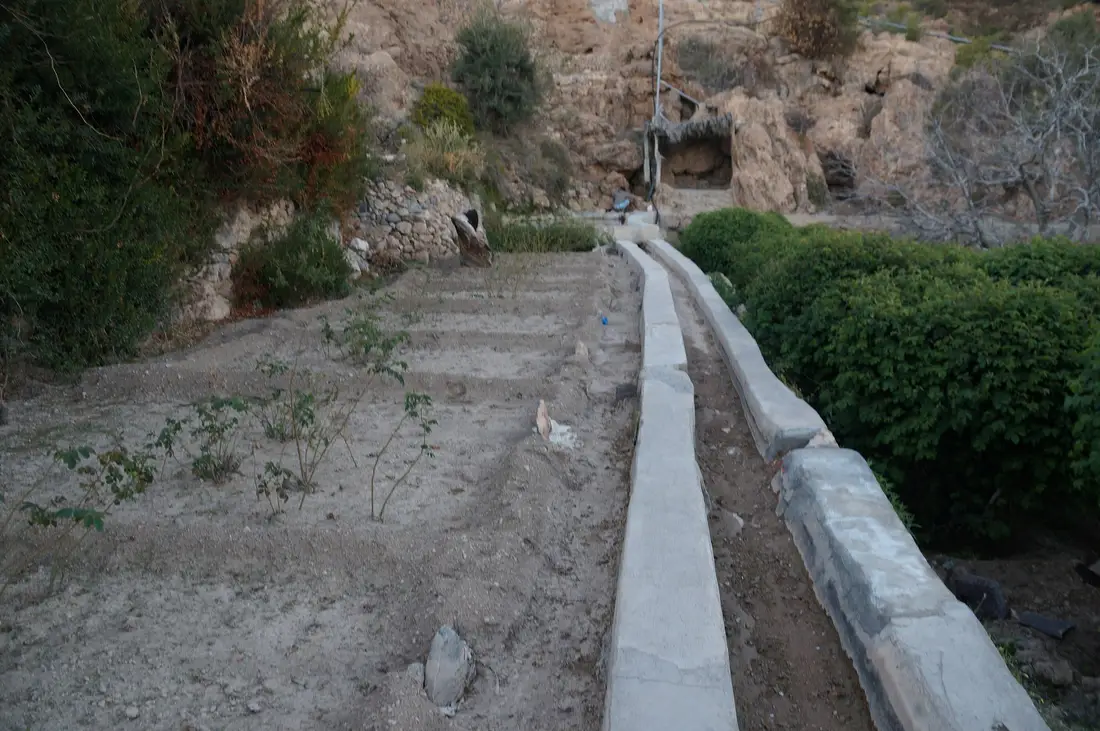
Farming is concentrated on the Al Batinah coastal plain, the interior oases and the monsoon-fed Dhofar region. Most irrigation water comes from aquifers and from some 3,000 active aflaj, traditional channels that are themselves fed by groundwater.
THE CONSTRAINT
Groundwater is the farm, and it is running down
- Outside Dhofar and the Hajar mountains, rainfall averages well under 100 mm a year, while potential evaporation is many times higher.
- Agriculture draws the large majority of the water withdrawn each year, almost all of it from aquifers and aflaj.
- Along Al Batinah, decades of pumping have lowered water tables and let seawater intrude: salinity has taken farmland out of production.
- In long droughts many aflaj run weaker or dry up, and the oasis date groves they feed suffer first.
- Desalination supplies the cities, but its cost rules it out for most irrigation. Hydro-retention works on demand, in the root zone, where every pumped cubic metre is paid for.
WHERE THE WATER GOES
Irrigation takes eight litres in every ten
ECONOMY AND FOOD SECURITY
Strong purchasing power, a narrow food base
Oman imports most of its cereals, sugar, dairy and meat, and part of its vegetables. Food security plans favour local production of high-value crops and a more efficient use of every cubic metre of groundwater.
THE MAIN CROPS
Date palms hold half of the cropped area
LEADING SECTOR
Dates: a heritage crop with a modern water problem
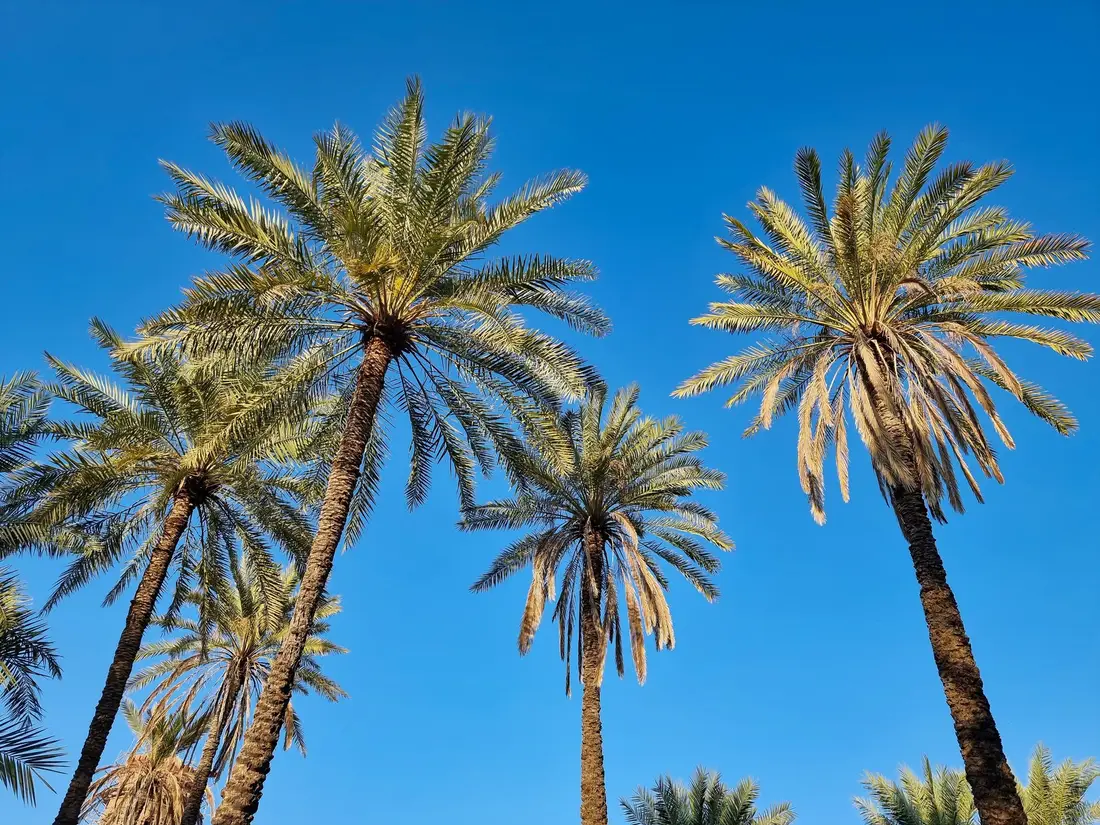
- Date palms cover about half of Oman's cropped area, from the Al Batinah coast to the interior oases.
- Many groves are still irrigated in basins, with high losses on sandy soils in summer heat.
- Saline groundwater along the coast lowers yields and fruit quality, and weakens young palms.
- Public programmes distribute offshoots of premium varieties: planting is the moment to act on water.
- EVERGREEN® placed in the planting pit holds irrigation water around the roots through the first hot season.
OUR RESPONSE
Two technologies, two different constraints
EVERGREEN® — holding the water
- A potassium-based hydro-retainer placed in the root zone at planting or at replant.
- It captures irrigation water and releases it back to the plant gradually, removing water stress through the hottest months.
- Absorbs on the order of 300 times its own weight; useful effect of 3 to 4 years in the soil.
- Breaks down by 20 to 25 % a year, with no build-up and no risk of overdosing.
ECOFERT® — feeding without depleting
- A micro-dose fertiliser of amino acids, nitrogen, phosphorus and potassium, made from renewable resources.
- Non-chelating: it does not strip the clay-humus complex and adds neither salinity nor nitrate load.
- Certified SOHISCERT and EU Bio, in use in 60 countries — an entry condition for premium buyers.
- 1 to 4 bottles of 140 ml per hectare, compatible with existing fertigation equipment.
The two products are sold separately but were designed to reinforce each other: the hydro-retainer extends how long water stays available, the fertiliser puts that water to work without degrading the soil.
ORDERS OF MAGNITUDE
Expected water saving by irrigation method
Low end of range (%)High end of range (%)
THREE PRIORITY AREAS
Where to run the first trials
Al Batinah
Oman's main farm belt
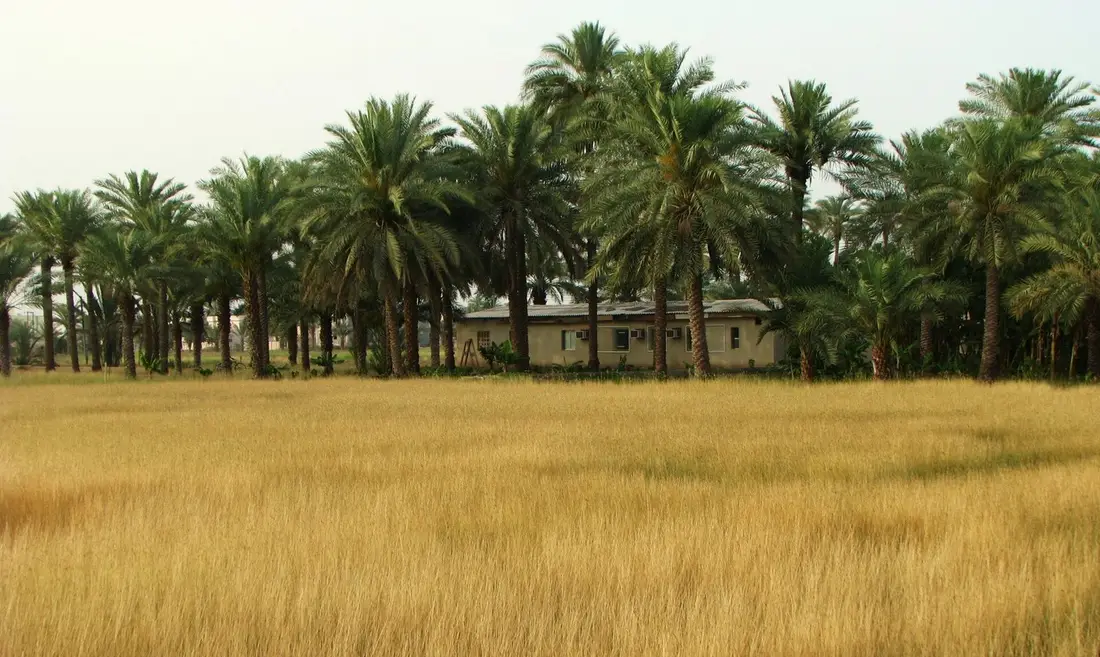
- Vegetables, dates and fodder on a coastal plain where aquifers are over-drawn and turning saline.
- Farms already on drip, with pumps running daily: the saving shows on the power bill.
- Many commercial farms able to host a trial block quickly.
Interior oases
Aflaj-fed date groves
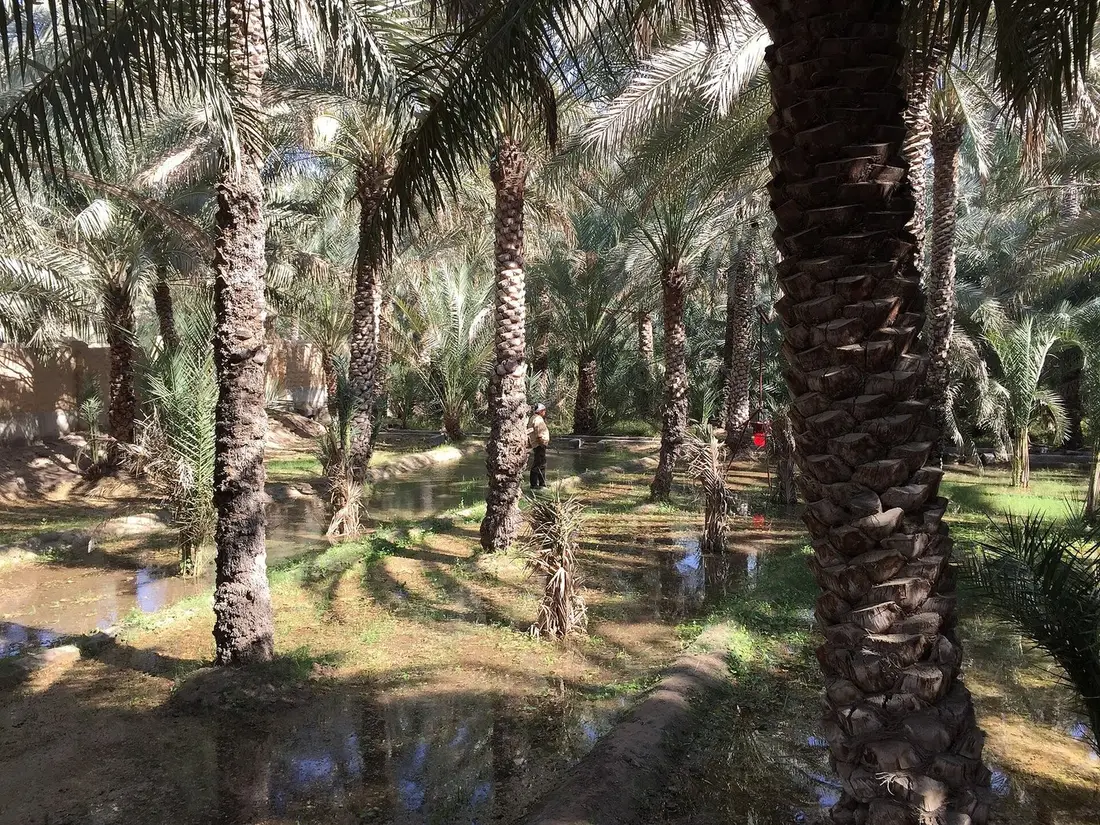
- Historic date groves around Nizwa and Bahla, irrigated by shared falaj rotations.
- Weaker flows in drought years mean longer intervals between turns.
- Young offshoots planted with a retainer establish before the summer heat.
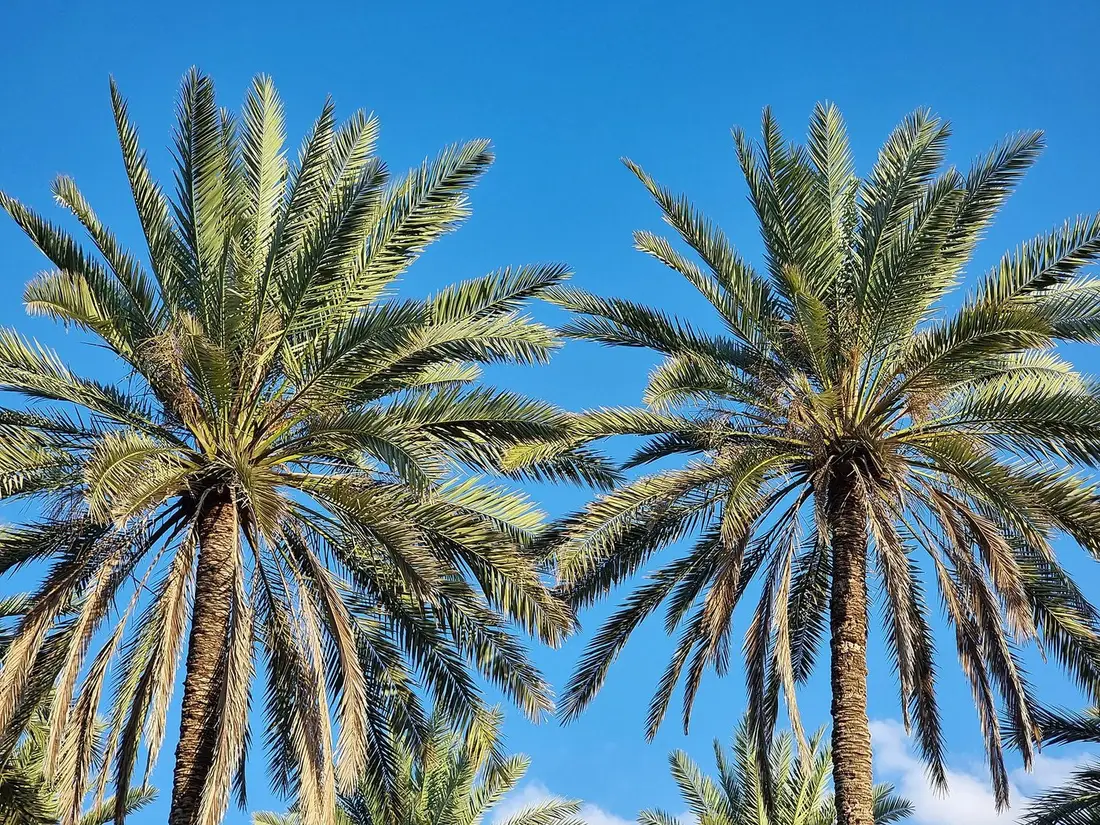
Dhofar — Salalah
Monsoon from June to September
- The only region with a monsoon: coconut, banana, papaya and vegetables near Salalah.
- Eight dry months outside the khareef: holding the monsoon water in the soil is the whole question.
- Soils poor in organic matter, where ECOFERT® adds value alongside the retainer.
HOW WE WORK
A staged rollout, measured at every step
- AssessmentSoil, irrigation method and crop are reviewed. No commitment at this stage.
- Trial blockOne comparative trial block, against a control block managed identically.
- MeasurementWater use and yield recorded over a full season, summer included.
- ExtensionGradual rollout to the remaining blocks, on the basis of what was measured.
The dosing rule is the same everywhere: 3 grams per litre of useful soil. What changes from one site to the next is the volume of soil the roots actually explore.
WHAT TO ANTICIPATE
Identified risks and our answers
Risks
- Summer heat above 45 °C and sandy soils: results vary strongly from one block to the next.
- Saline irrigation water in coastal areas, and caution toward any new soil input.
- Registration of fertilisers and soil conditioners before commercial sale.
- Long decision cycles at large agricultural companies and public bodies.
Our answers
- Run trials over a full season against a control block, so the gain is documented in figures.
- A potassium formulation, never sodium: it adds no salinity and is safe for food crops.
- Prepare the regulatory file early: analyses and certificates before negotiation starts.
- Work through farmer associations and model farms to reach many growers at once.
Acrylamide analysis (Polymex laboratory, ISO 9001, content below 3.0 µg/g) and REACH / SVHC screening (SGS) are available on request, together with the SOHISCERT certificate valid until 4 September 2027.
Tell us about your farm
Crop, irrigation method, soil type, the volume of water you use today. We come back with the matching combination of technologies, the dosing, and the trials already run in comparable situations.
A first conversation commits you to nothing.
Tell us about your farmcontact@evergreen-ecosorb.com · Green Solutions Groupe AIM SA, 46, route de la Condémine, 1475 Forel, Switzerland
Crédits photo
- albinfo — CC BY-SA 4.0, « Jebel Akhdar – irrigation canals in Al-Ayn »
- Okhtyartist — CC BY-SA 4.0, « Date palm tree irrigation »
- Altaf Habib — CC BY-SA 4.0, « "The Falaj" - Traditional irrigation system 06 »
- Omar AV — CC BY 3.0, « Farm house, tareef - panoramio »
- Prof. Mortel — CC BY 2.0, « Palm grove at Nakhl, Oman (1) »
Photographies issues de Wikimedia Commons, réutilisées selon leur licence.