MARKET DOSSIER
South Sudan
REPUBLIC OF SOUTH SUDAN
Sorghum, maize, cassava and vegetables in a country of floods and dry spells.
Where hydro-retention helps, and where drainage must come first.
Télécharger le dossier (PDF)THE MARKET IN BRIEF
A farming country that cannot yet feed itself
South Sudan combines vast arable land, large herds and the White Nile system, yet most production is rain-fed, small-scale and exposed to conflict, poor roads and repeated floods. Oil still provides the large majority of export earnings.
THE CONSTRAINT
Too much water in some places, too little in others
- The Greenbelt of Western and Central Equatoria has a long rainy season, while the east and north face shorter rains and dry spells.
- The Sudd wetland and the northern flood plains stay inundated for months: several years of major floods have displaced families and destroyed crops.
- Most farming is rain-fed on small plots worked by hand, with little access to seed, fertiliser or extension services.
- Poor roads cut markets off in the rainy season, and Juba relies heavily on food trucked in from neighbouring countries.
- Water retention only makes sense on well-drained, drought-exposed plots. On flood-prone land, drainage and raised planting come first.
THE FOOD BALANCE
Local cereal output covers about three quarters of needs
ECONOMY AND FOOD SECURITY
An oil economy where most people live from the land
Imports, humanitarian assistance and trade with Uganda, Kenya and Sudan fill much of the gap between local output and needs. Every stable gain in local production, storage and transport reduces exposure to price shocks and supply interruptions.
THE MAIN CROPS
Sorghum dominates the cereal area
LEADING SECTOR
Maize and cassava: the Greenbelt opportunity
- Western Equatoria has the rainfall, soils and season length to supply Juba and regional markets.
- Controlled trials near Yambio and Nzara reached 4.7 t/ha of maize with nitrogen and phosphorus, against 2.9 t/ha on control plots.
- Cassava is the resilience crop: it stays in the ground through bad years and feeds households between harvests.
- Roads, storage and processing, more than rainfall, decide whether a surplus reaches a market.
- EVERGREEN® and ECOFERT® are to be trialled on drained plots exposed to dry spells, against an untreated control.
OUR RESPONSE
Two technologies, for drained land under dry spells
EVERGREEN® — holding the water
- A potassium-based hydro-retainer placed in the root zone of drained, drought-exposed plots.
- It captures rain and releases it back to the plant gradually, bridging dry spells at emergence and flowering.
- Absorbs on the order of 300 times its own weight; useful effect of 3 to 4 years in the soil.
- Breaks down by 20 to 25 % a year, with no build-up and no risk of overdosing.
ECOFERT® — feeding without depleting
- A micro-dose fertiliser of amino acids, nitrogen, phosphorus and potassium, made from renewable resources.
- Non-chelating: it does not strip the clay-humus complex of soils that are often low in organic matter.
- Certified SOHISCERT and EU Bio, in use in 60 countries.
- 1 to 4 bottles of 140 ml per hectare, applied with a knapsack sprayer.
Neither product replaces drainage, good seed or safe storage. They are trialled where water shortage, not waterlogging, limits the crop.
ORDERS OF MAGNITUDE
Expected water saving by irrigation method
Low end of range (%)High end of range (%)
THREE PRIORITY AREAS
Where to run the first trials
Western Equatoria
The Greenbelt
- Maize, cassava, groundnut and vegetables under a long rainy season.
- Trials near Yambio and Nzara reached 4.7 t/ha of maize with fertiliser, against 2.9 t/ha on control plots.
- Better access and security than most regions for a monitored pilot.
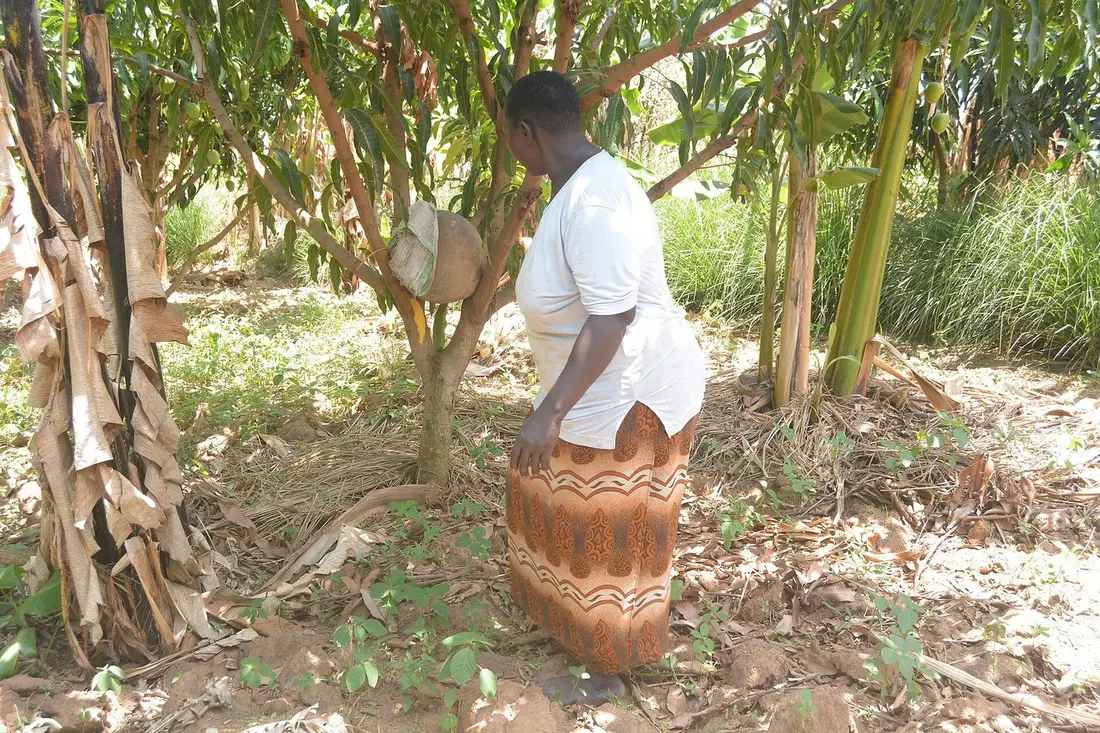
Central Equatoria — Juba
Peri-urban vegetables
- Tomato, onion, okra and leafy vegetables for a city that imports much of its food.
- Hand watering and dry-season irrigation from wells and the Nile.
- Short cycles and a cash market: a trial shows results in one season.
Northern Bahr el Ghazal
Sorghum and rice
- Rain-fed sorghum, and irrigated rice on the Aweil scheme.
- Dry spells early in the season, floods late: plots must be selected with care.
- Farmer groups already supported by FAO and NGO programmes.
HOW WE WORK
A staged rollout, measured at every step
- Site assessmentDrainage, soil, crop and access are reviewed. No commitment at this stage.
- Trial plotOne comparative plot on drained land, against a control plot managed identically.
- MeasurementEmergence, water use and yield recorded over a full season.
- ExtensionGradual rollout to other plots and sites, on the basis of what was measured.
The dosing rule is the same everywhere: 3 grams per litre of useful soil. What changes from one site to the next is the volume of soil the roots actually explore.
WHAT TO ANTICIPATE
Identified risks and our answers
Risks
- Insecurity and poor roads, which limit access to trial sites and raise transport costs.
- Flooding: waterlogged land gains nothing from water retention.
- Very little cash among smallholders, and dependence on donor-funded programmes.
- Import logistics through Uganda or Kenya, with long lead times.
Our answers
- Start with accessible, secure pilot sites around Juba and in Western Equatoria.
- Select only drained, drought-exposed plots, after a site assessment.
- Work through FAO, NGOs and donor programmes that already supply inputs to farmers.
- Group orders and hold a buffer stock in Juba before the planting season.
Acrylamide analysis (Polymex laboratory, ISO 9001, content below 3.0 µg/g) and REACH / SVHC screening (SGS) are available on request, together with the SOHISCERT certificate valid until 4 September 2027.
Tell us about your plot
Crop, drainage, soil type and how you water today. We come back with the matching combination of technologies, the dosing, and the trials already run in comparable situations.
A first conversation commits you to nothing.
Tell us about your plotcontact@evergreen-ecosorb.com · Green Solutions Groupe AIM SA, 46, route de la Condémine, 1475 Forel, Switzerland
Crédits photo
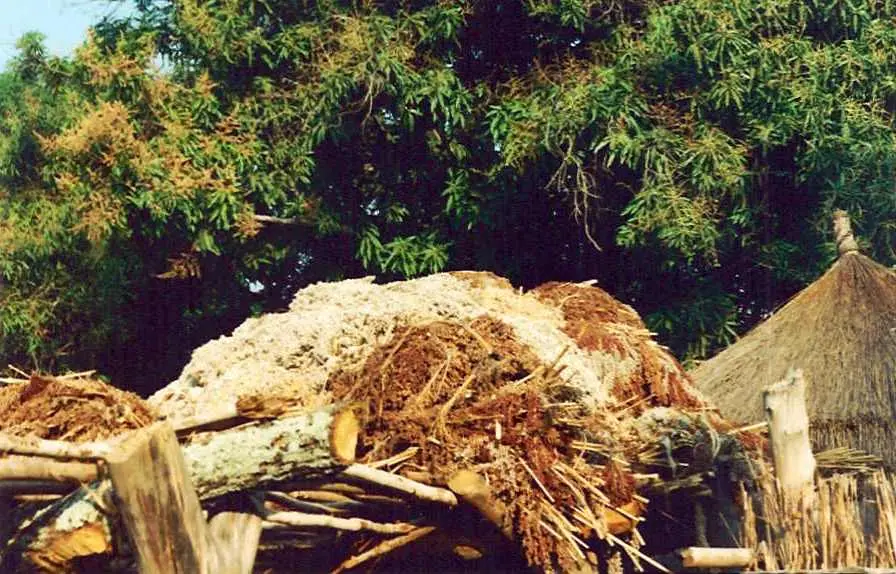
- Vetiverman — CC BY-SA 4.0, « Harvested grain in Mundri »
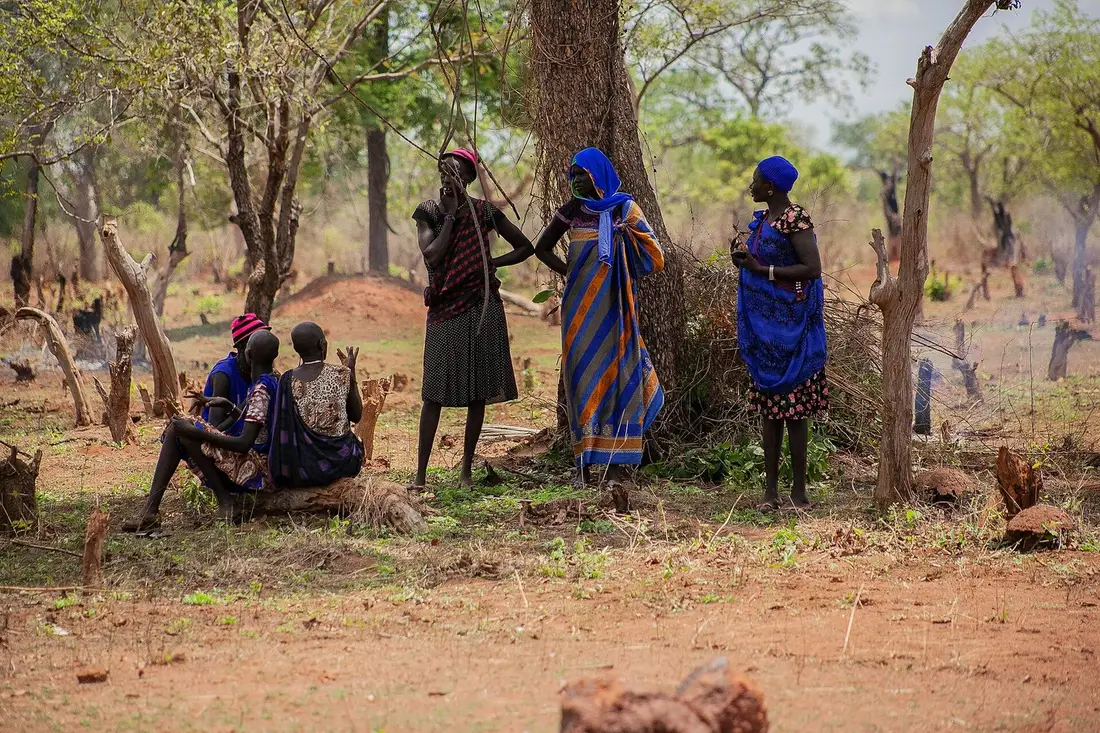
- Lomoraronald — CC BY-SA 4.0, « Women cool off after clearing the farm in South Sudan »
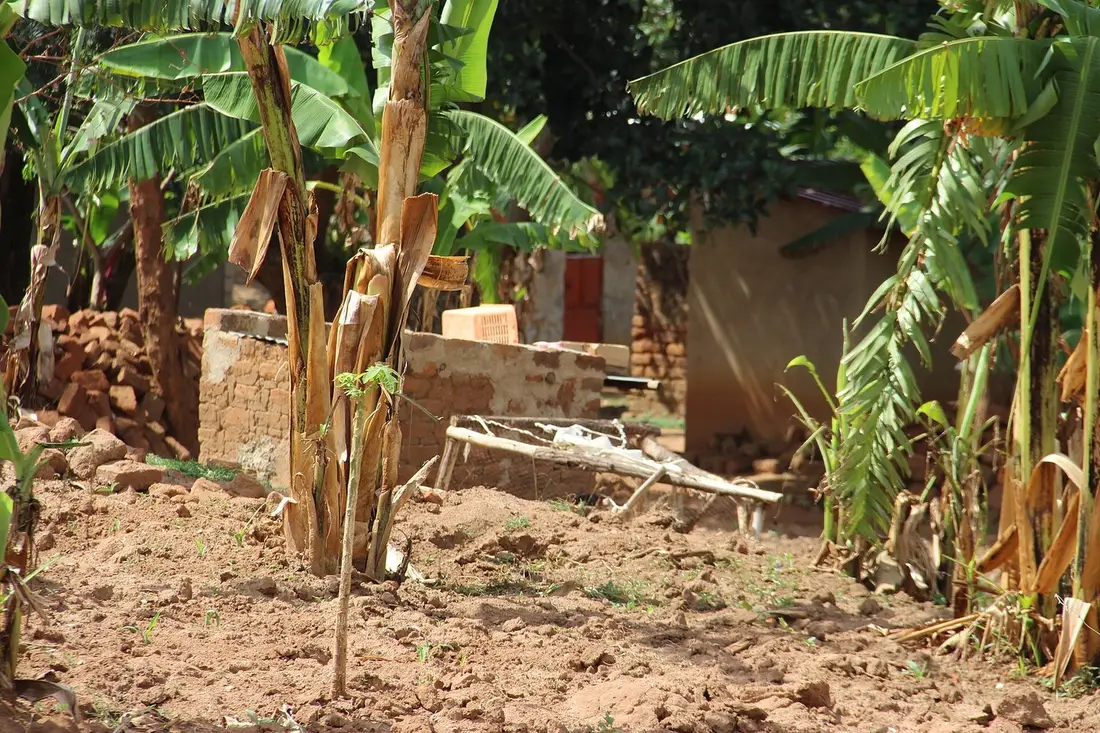
- Kabang Bladina Gideon — CC BY-SA 4.0, « A banana plantation »
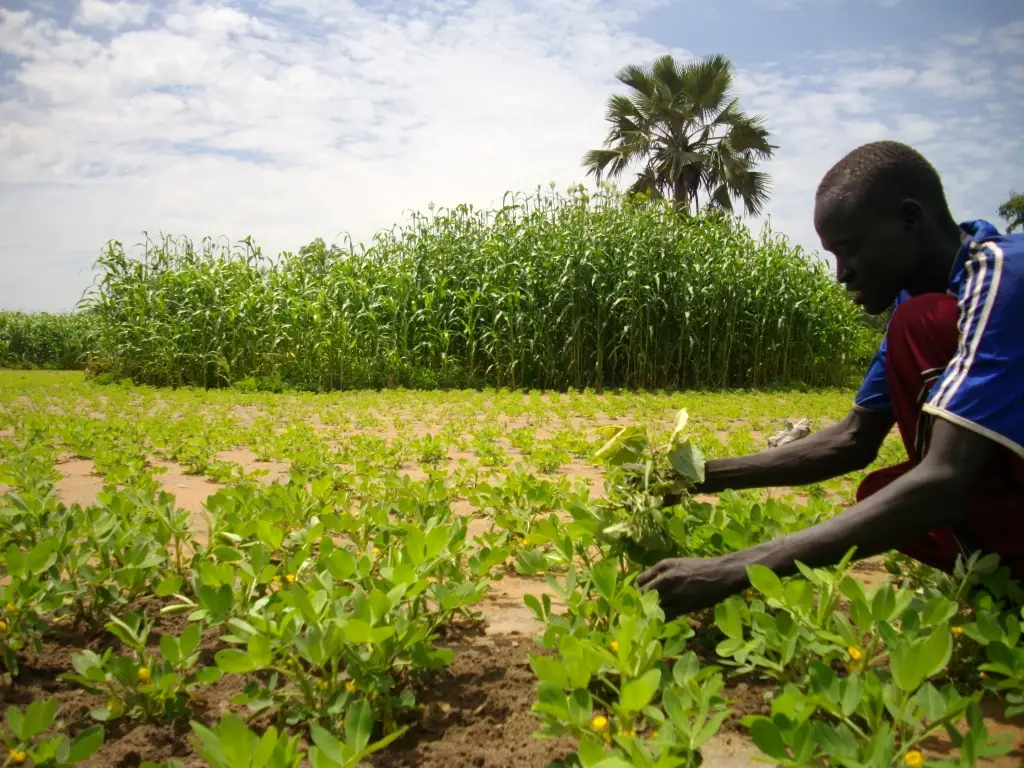
- Oxfam East Africa — CC BY 2.0, « Small-scale farmers increase production (7536268172) »
Photographies issues de Wikimedia Commons, réutilisées selon leur licence.