Europe · Spain
Processing tomato in Spain: what the water retainer changes per hectare
Three grams per plant, seventy-five kilos per hectare: here are the full sums, line by line, and where each figure comes from. We have no tomato trial yet; the yield gain used here is the one measured on watermelon in Mexico, a market-garden crop grown the same way. We say so plainly, and the trial is linked at the foot of the page.
See the trials behind these figuresThe sums
From the dose to the net gain, on one hectare
The product costs 12 € a kilo, delivered to the grower. At this dose one hectare takes 75 kg, that is 900 € at planting. Here is what the hectare brings back.
Europe
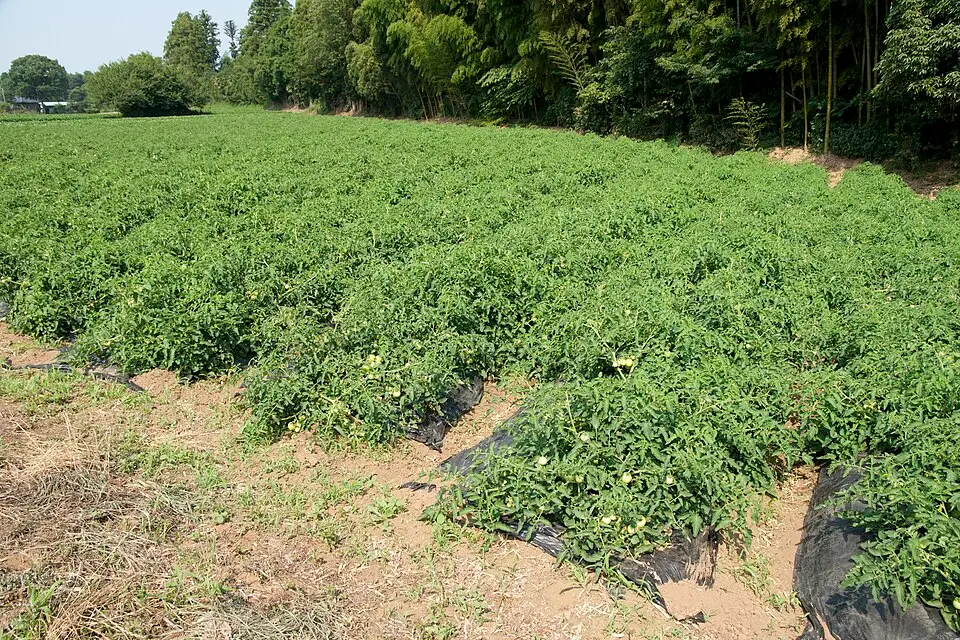
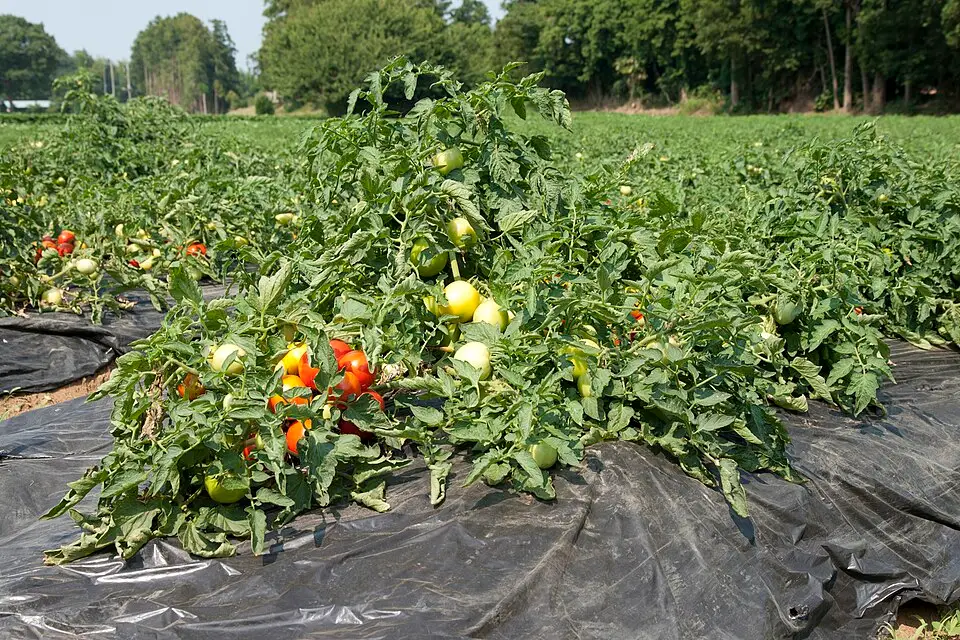
Spain · Processing tomato, open field
- Dose
- 3 g per plant3 g × 25,000 plants/ha
- Quantity per hectare
- 75 kg
- Cost of the product
- − 900 €/ha
- Yield without the product
- 90 t/ha
- Yield with the product
- 117 t/ha+ 30%, that is + 27 t
- Price paid to the grower
- 0.11 €/kgProcessing-tomato contract price — to be confirmed
- Extra revenue
- + 2,970 €/ha
+ 2,070 €net gain per hectare · 3.3 € earned for every 1 € spent
In pictures
The same sums, in two drawings
What happens under the soil
The water stays within reach of the roots
The water retainer is a powder that swells as it drinks rainwater and irrigation water. It holds that water in the root zone instead of letting it drain away below. The plant drinks when it needs to, and the grower can space out watering without the tomato going thirsty.
Where the figures come from
Every line, and its source
- Dose and planting density — 3 g per plant, 3 g × 25,000 plants/ha. These are the usual orders of magnitude for the Spanish open field: redo the sums with your own density.
- Price of the product — 12 € a kilo, delivered to the grower. That is our price, not an estimate.
- Yield gain — + 30%. Measured on watermelon in Mexico, not on tomato: we have no tomato trial yet. Watermelon and processing tomato are grown the same way, in the open field, under drip irrigation, on worked soil.
- A second marker — on potato in South Africa the measured gain is + 31.4%, very close to the + 30% on watermelon. Two market-garden crops, two continents, the same order of magnitude.
- Reference yield and price paid to the grower — 90 t/ha and 0.11 € a kilo are market averages. They change from one region and one year to the next, and remain to be confirmed.
Why Spain
Where every cubic metre counts
- The Campo de Dalías and the Campo de Cartagena supply Europe with tomato, pepper, cucumber and lettuce almost all year round.
- The aquifers are over-drawn and the Tagus-Segura transfer is shrinking: desalinated and recycled water are taking over.
- Desalinated water costs more than borehole water: every cubic metre saved shows up directly in the farm's margin.
- Read our Spanish market study (in Spanish)
Going further
The trials behind these figures
- Watermelons in Mexico: 60.5% less water and 30% more harvest
- Potatoes in South Africa: 31% more yield, 52% less water
- All our field trials →
The yield gains come from our field trials. The reference yields and the prices paid to growers are market averages, which change from one region and one year to the next: these figures give an order of magnitude, not a commitment. We will redo the sums with your own figures on request.